
 Baker's Bits
Making a Classic Dutch Pastry: Saucijzenbroodjes
Being Dutch, I grew up eating this pastry.
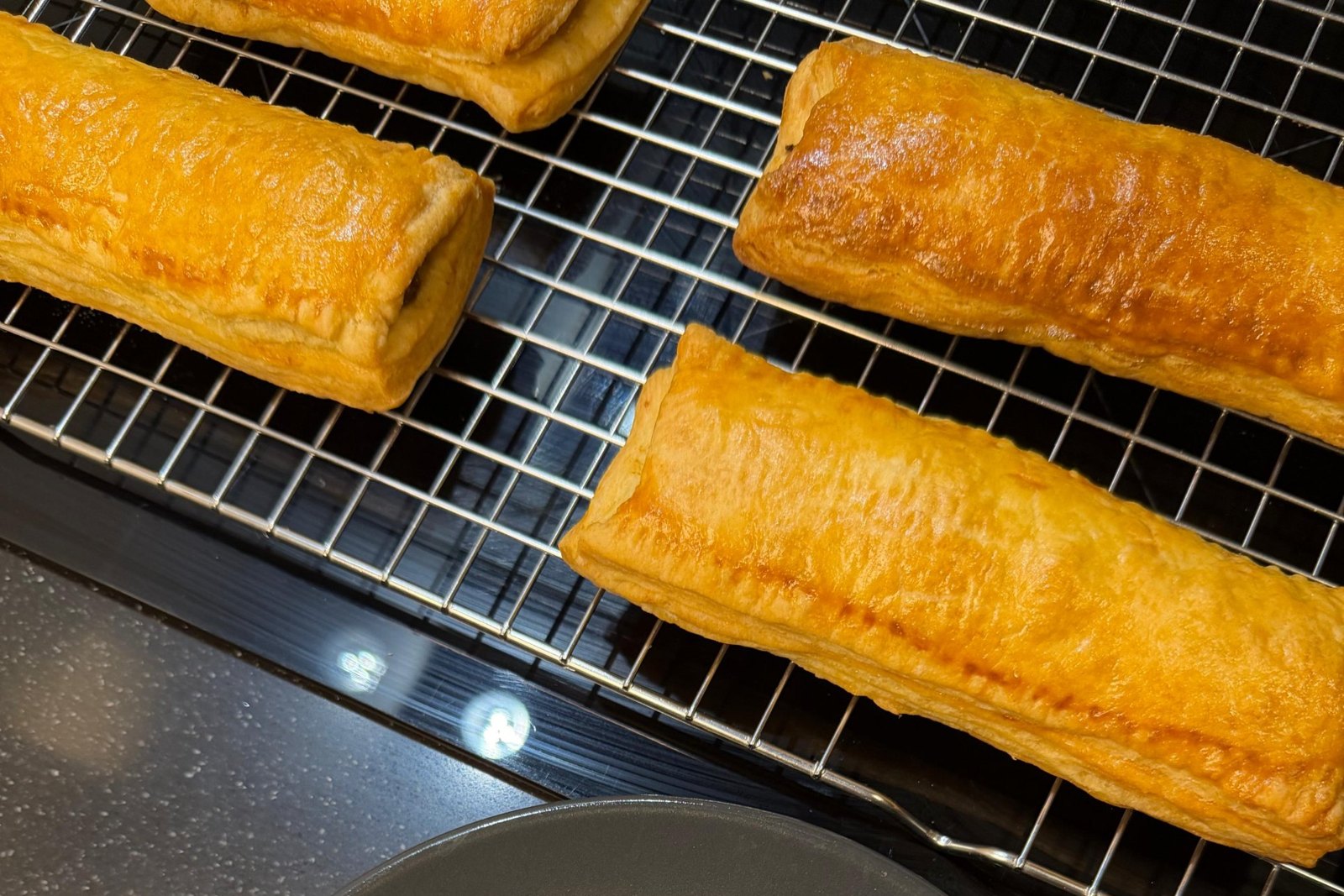
It’s name loosely translates to ‘sausage roll’, but I feel like that doesn’t do it enough justice. A saucijzenbroodje is a rich, buttery and flaky pastry filled with a mixture of ground beef, spices and a slice of milk-soaked white bread, which gives it a tender and juicy texture. That contrast of a soft and flavorful filling in a crisp exterior makes this pastry so delicious.
How to make this?
Making saucijzenbroodjes, you have two options. You can go with ready-made puff pastry from the grocery store or decide to make your own, which is a bit of a project since it takes some time. In this Note, I will take you through the whole process from start to finish, including making your own puff pastry.
Let’s start with your ingredients. For the puff pastry, you’ll need European butter, which has a higher fat percentage than most US-brands, resulting in a more pliable butter block and a flakier pastry.
For the puff pastry:
- 250g bread flour
- 140g water, at room temperature
- 5g fine salt
- 50g unsalted butter, at room temperature and cubed
- 200g unsalted European butter, cold
For the filling:
- ½ part of your puff pastry
- 2 slices of white bread, no crust
- 75g milk, full-fat
- 200g ground beef or pork, I prefer to mix the two, and use a 80/20 lean to fat ratio
- 1 ½ egg, at room temperature and beaten (save the leftovers for your egg wash)
- ½ tsp salt
- 1 tsp worcestershire sauce
- A pinch of nutmeg and black pepper
For your equipment, you will need a rolling pin and plastic wrap for this recipe.
Making the puff pastry
Start with shaping the 200g butter block. Place it between 2 pieces of parchment paper and roll it out until it’s a square that’s 0.4 in (1 cm) thick. Try to work relatively fast, as you don’t want this butter block to warm up too much. Wrap it in plastic wrap and place it in the freezer, making sure to place it on a flat, even surface. You want this butter block to be as cold as possible at this stage.
Then, make the dough. Knead the rest of the ingredients for the puff pastry very short, until a dough forms. Shape your dough into a square, wrap in plastic wrap and place in the fridge. Let rest for 30 minutes.
After 30 minutes, place your dough on a clean workspace and start rolling it from the middle outward, until four ‘flaps’ form. Take the butter block from the freezer and place it in the center. Fold the flaps over the butter block so it’s completely covering it, then roll your dough/butter block into a rectangle that’s three times longer as it is wide. Fold this rectangle over itself three times. Turn it a quarter, then roll it out into the other direction, in a rectangle again. Make the three folds again, gently press it down to ensure its shape stays a rectangle, and wrap in plastic. Place in the fridge and rest for another 30 minutes.
With 30 minutes rest time in between, do two more ‘roll and fold’-sessions, so you end up doing three total. After the last one, let it rest for 30 minutes in the fridge again and then use the puff pastry for whatever you like. In our case, we will use half this pastry block. Puff pastry freezes very well, so if you’re not planning on using the other half soon, wrap it tightly (you don’t want it to dry out) and keep frozen for up to 2 months.
Making the filling
Gently pull the crust from your two bread slices and place them on top of each other in a deep plate. Pour the milk over them and let this soak for 10 minutes.
Add all the other ingredients for the filling to a medium bowl. Lightly squeeze the milk-soaked bread slices to get rid of excess liquid and add to the bowl. Mix everything until combined, don’t overmix. I find it works best to mix this by hand but you could also use a wooden spoon or silicone spatula.
Assemble and bake the rolls
Now the fun part: assembly! Preheat your oven to 425°F (220°C). Roll your puff pastry into a rectangle measuring 12x14 in (30x35 cm). You could lightly flour your work surface if that makes it easier to work with, but try to avoid using extra flour as much as possible, and brush any excess flour off your pastries before baking.
Roll the meat mixture into 0.8 in (2 cm) sausages and place these lengthwise on your rectangle, in two rows. Now cut your dough in half, lengthwise straight through the middle. Fold the dough over the sausage and close the edges by brushing some water in between them, then pressing both sides down with a fork. You should now have two very long sausage rolls. Cut these into your desired length, I usually cut it into three, but you can also make them bite-sized. Place them on a baking tray lined with parchment paper and give each roll an egg wash. Bake for 30 minutes, and let them cool for at least 15 minutes on a cooling rack before eating. Enjoy this classic Dutch pastry!
Thank you for reading, and happy baking.